

Introduction
Many college websites display all programmes on one page using a simple list such as:
- Diploma in Business Management
- Certificate in ICT
- Diploma in Human Resource Management
- Short Course in Digital Marketing
Although this shows what the institution offers, it provides limited information to prospective students and search engines.
Creating a dedicated page for every major programme can improve both Google visibility and student experience.
1. Students Search for Specific Courses
A prospective student is more likely to search:
Diploma in human resource management in Nairobi
than:
Colleges with courses
A dedicated page allows your institution to target a specific search phrase and provide the information that person needs.
A general course-list page cannot explain every programme in enough detail.
2. Dedicated Pages Improve Search Relevance
Search engines rank pages based partly on how closely they match a user’s search.
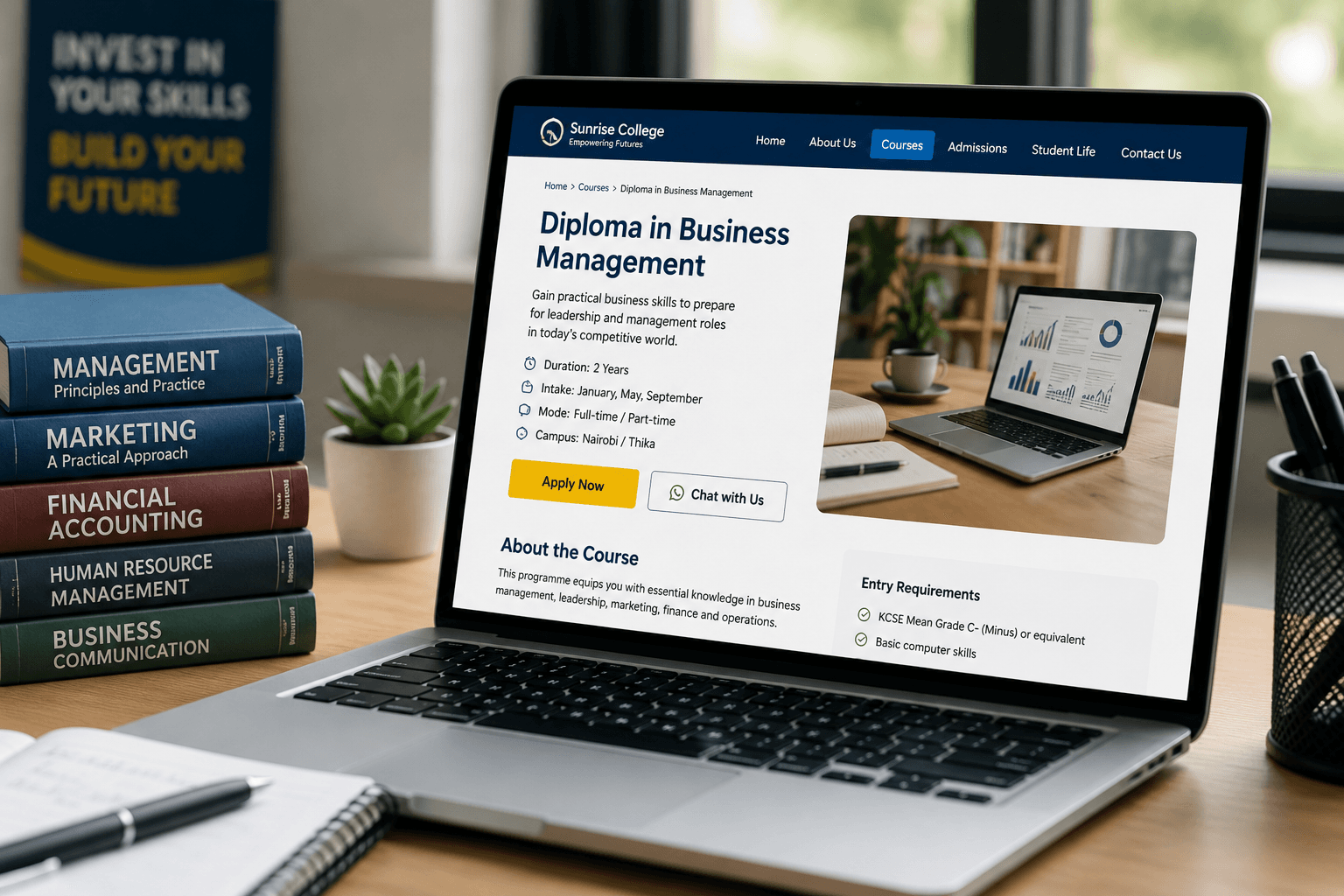
A page focused entirely on a Diploma in Business Management can include:
- Programme description
- Entry requirements
- Duration
- Modules
- Career opportunities
- Study mode
- Campus
- Intake dates
- Application process
This makes the page more relevant to people searching for that exact course.
3. Each Page Can Target Different Keywords
Different courses attract different searches.
For example:
- Accounting courses in Kenya
- ICT certificate course in Nairobi
- Human resource diploma requirements
- Digital marketing short course
- Procurement courses in Kenya
A separate course page allows your institution to optimise for each group of terms without confusing the content.
4. Students Receive Better Information
Course pages help reduce repetitive questions to the admissions office.
A well-designed page can answer:
- Do I qualify?
- How long is the programme?
- When is the next intake?
- Is evening study available?
- What careers can I pursue?
- How do I apply?
Visitors who receive clear information are more likely to become qualified enquiries.
5. Course Pages Support Advertising Campaigns
Paid advertisements perform better when they direct users to a page closely related to the advertisement.
Someone clicking an advert for a bookkeeping course should land on the bookkeeping course page, not the general homepage.
This creates a smoother journey and can improve the likelihood of an enquiry.
6. Internal Links Improve Website Navigation
Blog articles can link directly to relevant programmes.
For example, an article titled “Careers in Supply Chain Management” can link to your procurement and supply chain course page.
Course pages can also link to:
- Application page
- Fee information
- Accommodation
- Campus details
- Related programmes
- Student testimonials
This keeps visitors engaged and helps them discover more information.
7. Course Pages Can Rank Over Time
Advertisements stop generating traffic when the budget ends. An optimised course page can continue attracting search visitors over a longer period.
SEO takes time, but a useful page can become a long-term student recruitment asset.
8. What Every Course Page Should Include
Each page should contain:
- Clear course title
- Short overview
- Who the course is for
- Entry requirements
- Duration
- Study options
- Course structure
- Career opportunities
- Intake information
- Campus location
- Fees or fee enquiry option
- Application button
- WhatsApp or telephone contact
- Frequently asked questions
The page should be easy to read on both mobile phones and computers.
9. Avoid Duplicate Course Descriptions
Do not copy the same general paragraph onto every programme page.
Each course should have unique information based on:
- Skills taught
- Qualification level
- Career path
- Target student
- Course duration
- Delivery method
Unique and helpful content is more valuable to both students and search engines.
Conclusion
Dedicated course pages allow Kenyan colleges to appear for more specific Google searches, provide better information and generate stronger student enquiries.
Instead of treating a course catalogue as a simple list, institutions should view every programme page as a separate student recruitment opportunity.
ENROLLus helps education institutions create search-friendly course pages that improve online visibility and support applications.
Book a free 30-minute discovery call to identify the changes that could help your institution attract more qualified enquiries and increase student enrollment.